
The Climate Justice Resilience Fund’s grant portfolio of over 65 projects worldwide highlights the critical role of community-led loss and damage responses in strengthening foundations for adaptation and resilience-building.
The FRLD is expected to submit a call for proposals at COP30 in Belém, Brazil, to allocate an initial fund of $250 million. This is a promising start, but a huge gap still remains in addressing the estimated $100 billion per year that several developing countries argue is needed to address loss and damage. Meanwhile, the fund lacks a dedicated mechanism for local communities to gain direct access to small grants.
CJRF is one of the first philanthropic funds to work in partnership with communities experiencing loss and damage. In a new brief – Delivering enduring impact: Why community-led loss and damage funding is critical to wider climate action – CJRF lays out the urgent need for alternative funding streams and the impact they could have, through presentation of community-centred case studies that reach beyond recovery toward resilience and renewal.
This brief outlines how loss and damage funding should be considered an essential component of climate finance given that it supports and extends the impact of other climate and development investments. Since 2021, CJRF has channelled over US$5.5 million to more than 65 partners worldwide.
Learnings from their implementation partners show that loss and damage funding:
1) Strengthens stability and resilience:
2) Supports communities holistically:
3) Delivers durable gains:
4) Provides opportunities for new, community-led, context-driven approaches:
The brief showcase projects that highlight the value of loss and damage funding:
In Narok County, Kenya, Women in the Wild brings together Maasai women and girls to restore wellbeing, preserve cultural identity, and ensure sustainable resource management, strengthening women’s empowerment, social stability, and ecological resilience.
In Tamil Nadu, India, The Human Rights Advocacy and Research Foundation (HRF) works with displaced communities to tackle interconnected challenges across gender, mental health, education, and disability—showing how intersectional approaches drive wide-ranging social impact.
The Banaban Human Rights Defenders Network is helping the Banaban community on Rabi Island, Fiji to strengthen resilience through cultural revitalization, gender equity, and securing sustainable livelihoods, to mitigate the erosion of culture caused by displacement.
Participatory Ecological Land Use Management (PELUM) Uganda, supports people in the highlands of Kigezi who have faced generations of displacement and marginalization following their eviction from ancestral forest lands. The project is showing how community-led efforts can strengthen ecosystems, rebuild social cohesion, and foster resilience rooted in culture.
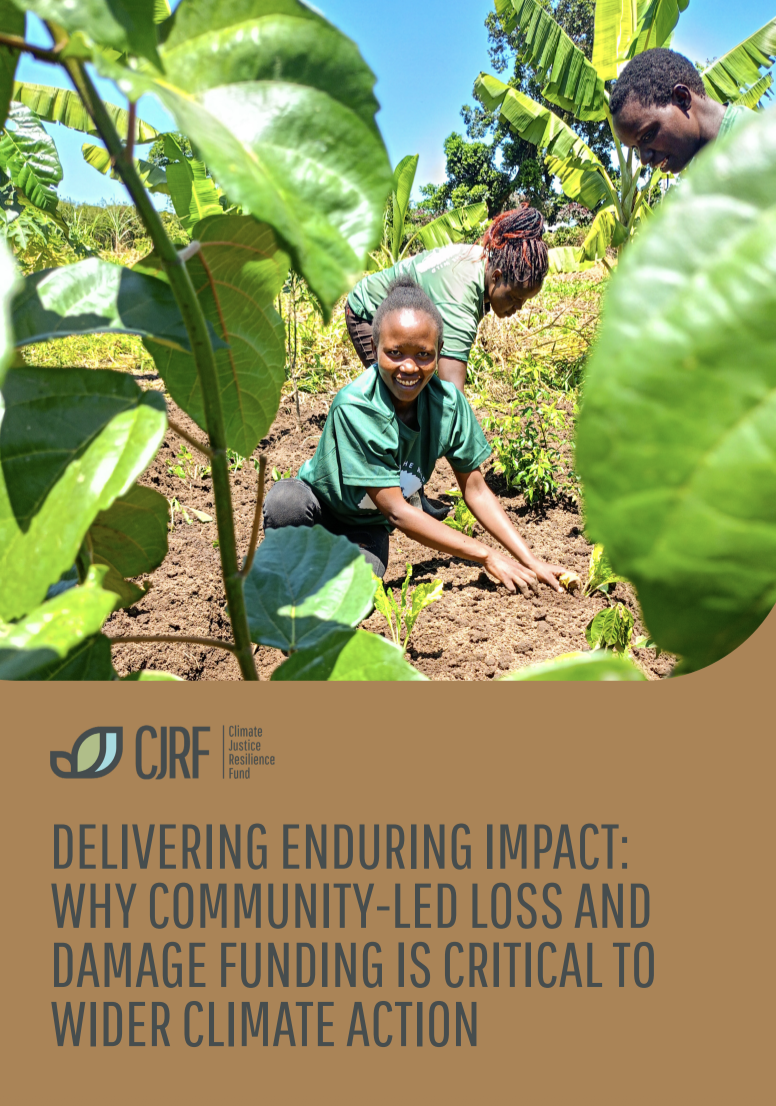
You can download the brief in full here.


